At its core, aventurine is metamorphic quartzite primarily composed of silicon dioxide (SiO2) featuring platelet-shaped mineral inclusions that create its signature glitter effect, with colors ranging from vibrant greens to rare blues depending on the specific embedded minerals.
You're admiring gemstone jewelry when a sparkling green stone catches your eye—labeled "aventurine." Or perhaps you're researching crystals and keep encountering contradictory claims about this shimmering mineral. Suddenly, practical questions surface: Is that sparkle natural? What minerals create these colors? How does it differ from similar-looking stones? Whether you're evaluating jewelry, adding to a collection, or sourcing materials, understanding aventurine's geological reality matters. We'll walk through its mineral composition, formation process, quality indicators, color variations, and practical considerations to clarify what makes this stone unique.
1. What minerals create aventurine's signature sparkle?
2. How do different inclusions produce color variations?
3. What geological processes form authentic aventurine?
4. How can you recognize quality and natural formation?
5. What practical implications does its composition have?
6. How to distinguish it from similar minerals like jade?
7. Why do origin locations affect appearance?
The glittering phenomenon in aventurine, called aventurescence, primarily comes from finely dispersed mica platelets within quartz that scatter light directionally as you rotate the stone, with green varieties owing their sparkle to fuchsite mica inclusions rather than surface treatments.
Quartz forms the transparent foundation that allows light to penetrate and reflect off embedded minerals. Inclusions like fuchsite (a chromium-rich muscovite variant) typically align parallel during metamorphism, creating coordinated flashes rather than random sparkles. Synthetic versions might look superficially similar but often show uniform glitter patterns not found in natural stones, since geological processes create irregular distribution. Larger inclusions tend to create stronger flashes but can compromise structural integrity, while subtler patterns may indicate finer crystallization. Specimens from different mines exhibit unique signature sparkle due to local pressure conditions that dictate mica alignment geometry.
Colors result directly from type and concentration of included minerals—green from chromium-bearing fuchsite, reds and browns from oxidized hematite or goethite particles, and rare blues from crocidolite fibers—all suspended in the silica matrix during recrystallization.
Tanzanian blue aventurine often appears paler than green variants because crocidolite inclusions typically occur at lower densities. Natural color zoning tends to be uneven under magnification; you might notice cloudy patches where inclusions clustered during formation. Green hues vary significantly based on chromium content in fuchsite—Indian stones frequently show deeper saturation due to trace vanadium. Red varieties showing unnatural concentration along fracture lines may suggest artificial enhancement, as hematite typically diffuses more uniformly. Unlike dyed stones, natural aventurine exhibits consistent coloration throughout cross-sections when fractured.
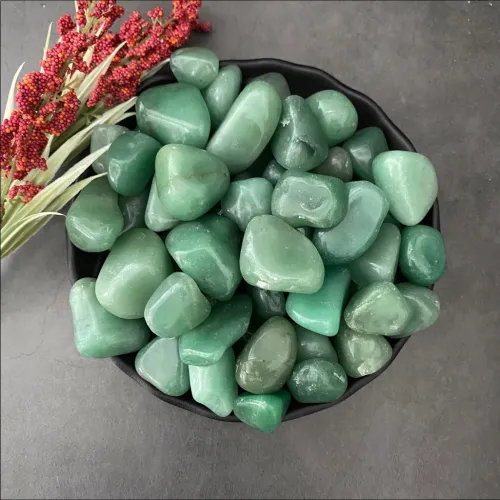
Aventurine originates when silica-rich sedimentary or igneous rocks undergo regional metamorphism involving sustained heat (300-500°C) and directed pressure, causing quartz to recrystallize around existing mineral fragments over geological timescales.
This metamorphic process typically occurs at convergent tectonic plate boundaries where older rocks get subducted. The embedded minerals remain largely unchanged chemically but become oriented by pressure, explaining the directional sparkle effect. Indian deposits often show finer grain structure because slower cooling creates smaller crystalline domains, while Chilean variations may display bolder patterns from rapid thermal shifts. Unlike volcanic obsidian with uniform texture, aventurine's characteristic granularity comes from this interrupted crystallization. Authentic specimens typically exhibit subtle internal fractures around inclusions—evidence of differential expansion rates during cooling that synthetics frequently lack.
Quality primarily depends on inclusion characteristics and geological authenticity rather than treatments—optimal examples show bright aventurescence from numerous reflective inclusions at varied angles without concentrated surface coatings.
When evaluating stones at a shop or during unboxing, start with basic observational tests under natural light. Authenticity checks don't require lab equipment: rotate the piece near a direct light source to see if flashes change dynamically—synthetic glass or resin imitations tend to produce uniform sparkle. The weight-to-size ratio matters too; quartz's density creates a distinct heft noticeably heavier than glass or plastic alternatives.
Always inspect stones using these field-tested approaches:
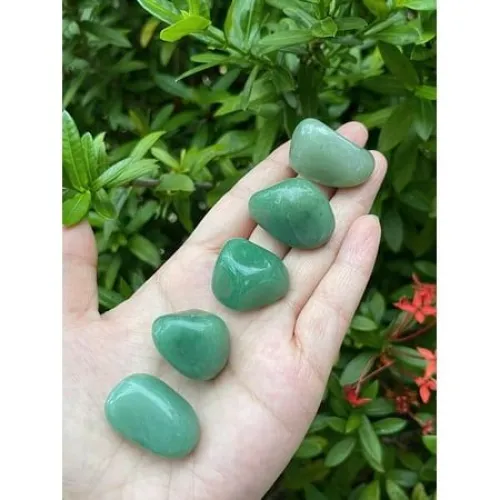
Composition dictates how aventurine performs during lapidary work—its quartz matrix maintains moderate 6.5-7 Mohs hardness allowing decent polish, while embedded soft minerals require adjusted cutting techniques to avoid flaking during fabrication.
For ring or bracelet items subject to abrasion, stones with densely clustered inclusions generally resist impact better than those having large isolated flakes. The stone's tendency to form conchoidal fractures (smooth curved breaks like bottle glass) helps experienced carvers predict cleavage points. When creating cabochons, lapidaries typically orient pieces so inclusions lie parallel to curves rather than angles for maximum sparkle. For tumbled stones or beads, extended vibration polishing can fracture surface micas—cautious artisans limit exposure to retain the signature glitter. Blue variants require extra handling precautions due to potentially fibrous crocidolite requiring specialized cutting to prevent particle release.
Remember these core verification principles before selecting aventurine: prioritize stones showing three-dimensional glitter depth rather than superficial surface sparkle and compare specimens under magnification whenever authenticity matters—natural inclusions have telltale geometric patterns that synthetics can't replicate perfectly.
Trust dealers providing mine origin specifics like Indian versus Russian sources, as regional geology creates functional differences in durability. Weight appreciation matters too—hold multiple samples and notice the expected quartz density difference from lookalikes. Finally, for online purchases, confirm generous return policies before buying since monitors vary significantly in rendering greens and blues.
Q: Is green aventurine actually quartz or feldspar?
A: Authentic green aventurine forms as quartzite containing mica, differing chemically from feldspathic greens like amazonite where aluminum silicates dominate.
Q: Does natural blue aventurine exist unassisted?
A: Natural blue variants do occur but remain rare—most come from Tanzania with characteristic crocidolite inclusions rather than dyes or treatments.
Q: How distinguish aventurine from amazonite visually?
A: Aventurine typically displays visible sparkle absent in amazonite and shows a glassier luster compared to feldspar's waxy appearance when polished.
Q: What highlights Indian aventurine quality differences?
A: Stones from southern Indian seams usually feature finer mica dispersion yielding more uniform sparkle through the quartz matrix than Brazilian alternatives.


$
