Ever find yourself squinting at a jewelry display, captivated by a green stone sparkling with tiny golden flecks? Or maybe you've scrolled through gem listings wondering why one "aventurine" looks cloudy while another practically dances with light. That flicker—called aventurescence—isn’t just visually striking; it speaks volumes about the stone’s geological birth and craftsmanship. Beyond the initial fascination lie practical questions collectors and creators face: How do you spot the difference between nature’s artistry and clever imitations? Why do some pieces glow more intensely? We’ll explore how ancient rocks transform into objects of beauty through Earth’s processes and artisanal skill.
1. What geological processes create aventurine’s distinctive sparkle?
2. How can quality be evaluated before purchasing?
3. What techniques do artisans use to enhance its features?
4. How do mining locations affect stone characteristics?
5. What physical properties define natural aventurine?
6. What signals indicate authenticity?
Aventurine develops when heat and pressure merge quartz with mineral flakes like mica, aligning inclusions parallel to allow directional sparkle. The color variations depend on mineral interactions during metamorphism—fuchsite mica creates green tones, hematite yields red.
Deep within Earth’s crust, quartz-rich rocks undergo metamorphic changes over millions of years. As temperatures rise, minerals like fuchsite or hematite dissolve and recrystallize within the quartz matrix. The critical factor for sparkle—called aventurescence—is the parallel alignment of tiny mineral plates as they slowly settle during crystallization. These internal layers act as light reflectors. Uneven color patterns can indicate slower formation times, while temperature reactions differ from synthetics due to quartz’s higher thermal conductivity. Higher-grade stones may even contain trapped fluid bubbles, visible under magnification.
Focus on inclusion alignment, color saturation depth, and structural consistency – well-distributed sparkle at multiple angles generally indicates higher grade material.
Judging quality involves understanding both mineral science and visual performance:
These field-tested observations help separate exceptional specimens:
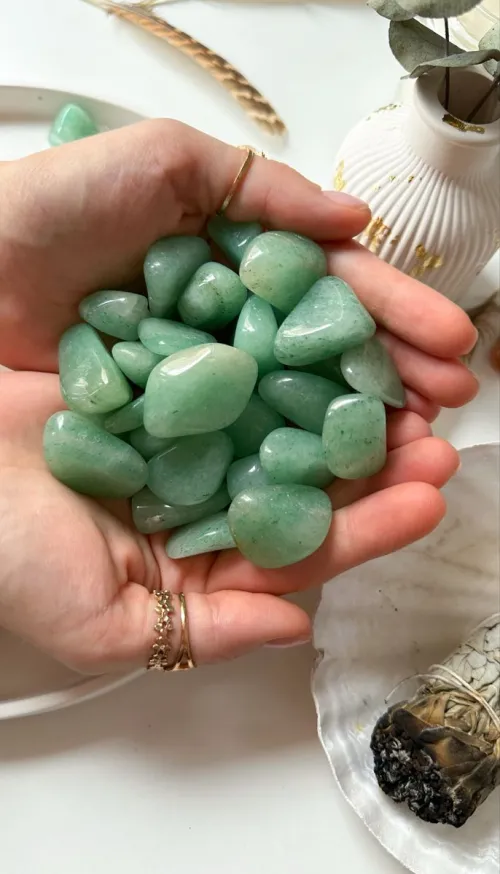
Lapidaries maximize aventurescence by orientating cuts parallel to inclusion planes, typically creating domed cabochons that optimize light reflection.
Cutting aventurine resembles unlocking captured light. Artisans study rough stones under magnifiers to map inclusion planes before positioning them beneath the grinding wheel. Cutting parallel to these micro-layers is essential—misalignment leads to dull results. The classic cabochon’s curved top serves both aesthetics and physics, functioning like a lens to magnify sparkle across the dome. Post-grinding brings further nuance: Polishing techniques vary by region—Indian artisans might use fine diamond abrasives, while Chilean workshops favor oxidic pastes—each bringing distinct surface luminance.
Indian deposits typically yield robust green stones with dense fuchsite flakes, Chilean sources produce vivid reds with hematite grains, while Russian sites generate blue-green variants often showing coarse quartz patterns.
Location doesn’t merely suggest geography—it shapes mineral identity. Tectonics and historical mineralization differ across terrains:
Unearthed material undergoes rigorous sorting—typically only 10-20% holds gem-grade potential. Regional processing traditions then further distinguish them.
Aventurine ranks 6.5-7 on the Mohs hardness scale due to quartz dominance, with density influenced by inclusion types—green types feel heavier with higher fuchsite content.
Material composition drives performance. The base material is quartz, a durable mineral formed of silicon dioxide. What transforms it into aventurine are those metallic-looking inclusions: Microscopic plates of minerals like fuchsite (chromium-rich muscovite) or hematite. When light hits these plates during stone rotation, it creates metallic flashes. The specific gravity reading offers clues about bulk composition—pure quartz measures 2.65, increasing toward 2.69 with heavier inclusions. Thermal tests reveal authenticity too: Quartz conducts heat faster, so touching it to your skin should create quicker cooling sensations than resins or glass.
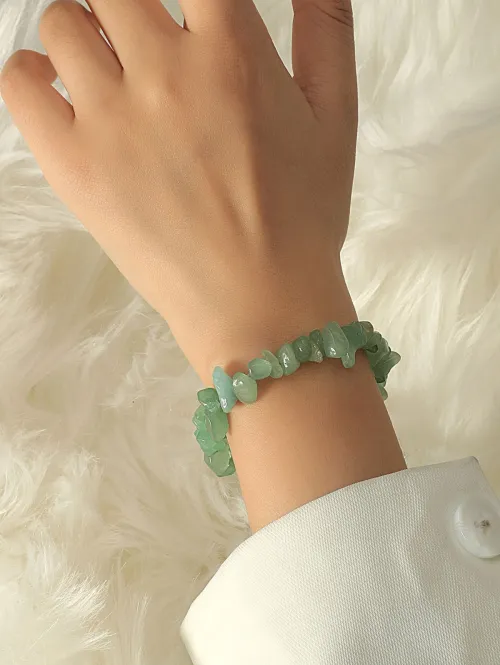
Genuine stones combine directional sparkle response with minor surface imperfections and density heft—synthetics often exhibit artificial perfection like uniform flecks.
Experienced handlers watch for these physical tells:
Focus on these key takeaways: Prioritize sellers who provide daylight videos of rotations to verify natural sparkle patterns; examine cut orientation on domed cabochons to ensure inclusion layers maximize light performance; and cross-check region, weight, and texture anomalies that reveal synthetic substitutes.
What truly matters boils down to one principle: Real value rests not in flawless perfection but in understanding and verifying how Earth created each signature pattern and glow.
How does aventurine visually differ from jadeite?
While similarly green, aventurine shows glittery internal flashes unknown in jadeite, usually feels cooler to touch due to higher quartz conductivity, and tends lighter in weight at comparable sizes.
Why are Indian green aventurines often darker than Chilean?
Higher fuchsite concentrations in some Indian sources deepen green saturation, while Chilean stones typically contain more hematite or goethite, creating red-brown undertones.
Does natural aventurine degrade in sunlight?
Over decades intense UV exposure may cause minor fading in some varieties, though quartz stability generally protects internal structures better than most gems.
Aventurine pronunciation versus “adventure”?
Technically: “uh-VEN-chur-in” emphasizing the second syllable differently than “ad-VEN-chur.”


$
