You’re scrolling through an online gem marketplace or examining a beaded bracelet when you pause—how much should that speckled green stone actually cost? Whether you’re evaluating an heirloom, considering a purchase, or just gem-curious, aventurine’s value isn’t always obvious. Realistic pricing depends on often-overlooked details like subtle glitter patterns under sunlight or how consistently the color holds across a piece. This guide unpacks what professionals watch for, how quality variations swing prices, and why two seemingly similar stones can have wildly different worth.
1. What price range is reasonable for raw or polished aventurine?
2. Which specific traits make aventurine more valuable?
3. How can natural aventurine be distinguished from synthetics?
4. What should you look for when judging quality?
5. Why do geological sources affect availability and cost?
6. How do rare colors like blue command higher prices?
Entry-level ornamental pieces fall between $5 and $40—think palm stones or basic beads—while fine jewelry components range from $20 to $200. Investment-grade specimens with vivid color and dense sparkle can hit $500, but these remain uncommon.
Aventurine isn’t priced per carat alone like diamonds. Bulk tumbled stones may sell for less than $0.50 per gram, but a premium 30mm cabochon with uniform green hue and metallic glitter could reach $80. Market factors also apply: Brazilian-sourced material often costs 10-20% more than Indian varieties due to perceived quality differences. For context, a 10" carved rose quartz sculpture might sell for $150, while an equivalent aventurine piece usually stays under $90 given aventurine’s relative abundance.
Five tangible factors—color saturation, inclusion quality, transparency, craftsmanship, and origin—create aventurine’s pricing tiers. Synthetic versions typically sell for 70-90% less than natural equivalents.
The most coveted aventurine displays evenly distributed “aventurescence”—that signature metallic glitter caused by mineral inclusions like fuchsite or hematite. Under magnification, natural stones show randomly clustered flecks rather than synthetic glass’s mechanical uniformity. A well-executed cabochon cut amplifies this effect, potentially doubling raw stone value. While green aventurine remains affordable (India and Brazil produce abundantly), the russian-supplied blue variant fetches 3-5x more due to scarcity.
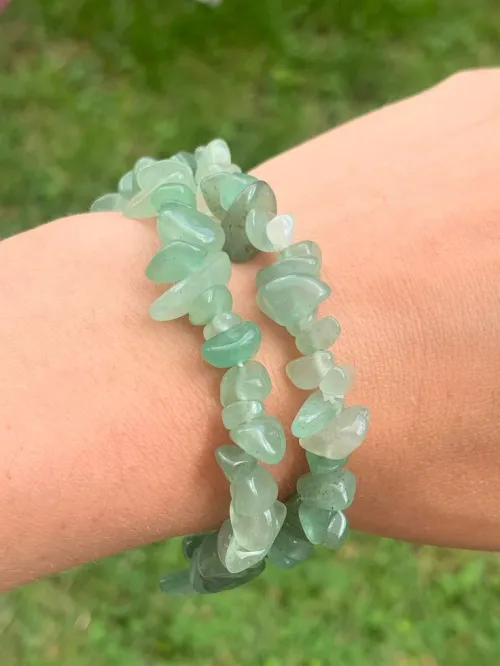
Authenticity checks focus on inclusions, weight consistency, and subtle color behavior rather than mystical properties. Verifiable sourcing documentation supports higher valuations.
Genuine aventurine weighs noticeably heavier than simulant glass when tested against comparable quartz. Natural stones also exhibit softer color transitions under varying light sources. High-value purchases warrant professional verification: reputable labs examine inclusion patterns using microscopes to confirm organic mineral formation, not manufactured sparkle.
Three assessments you can attempt before buying:
Prioritize visible texture, structural integrity, and cutting precision—flaws like visible pitting reduce functionality and worth.
Surface polish matters for jewelry applications. Run your finger across facets; quality finishes feel uniformly smooth without waxy buildup. Backlit examination reveals internal flaws: hairline cracks significantly decrease durability and value. Tumbled decor pieces allow more forgiveness. For beads, inspect drill holes—chipped edges suggest rushed production that weakens structures over time.
While origin alone doesn’t guarantee quality, certain regions yield stones with predictable characteristics. Russian material often excels in color intensity.
Supply chain transparency impacts ethics and pricing. Major deposits exist across india producing green and blue-gray tones, while Spain offers distinctive red-brown varieties. Stones accompanied by verifiable origin certificates typically carry 15-30% premiums. Less ethical sellers might obscure real sources—when investing above $100, request quarry documentation.
Green aventurine dominates 80% of the market, keeping prices accessible. Blue versions are scarcer and can command triple green’s value.
Color saturation directly correlates with desirability. Deep forest green with silver glitter averages $20–$70 per carat cut, whereas muted yellowish pieces drop below $10. Among rarest finds: orange aventurine from Chile and violet-toned Indian stones. When comparing hues:
Your aventurine should satisfy two non-negotiables: visible aventurescence under direct light and surface integrity free of fissures. Verify origins if spending over $100.
Always rotate stones against diverse backdrops—sunlight reveals glitter density while white paper highlights color consistency. For jewelry, prioritize smaller high-clarity cabochons over larger flawed pieces; they withstand daily wear better. Match quality to purpose: decorative bowls need moderate grades, but ring centerpieces deserve investment clarity. Finally, cross-check prices across three sellers minimum using comparable traits to avoid premiums.
Q: Does tumbled aventurine hold meaningful resale value?
A: Small tumbled pieces rarely gain value long-term unless exceptionally rare colors or patterns exist. Polished jewelry components retain worth better.
Q: Can intense sparkle alone indicate high worth?
A: While glitter density (aventurescence) adds appeal, context matters—overly uniform sparkle may signify lower-value synthetic material.
Q: Are raw stones worth more than cut ones?
A: Not universally. Rough crystals appreciate among specialists, but most buyers value lapidary work. Superior cut quality often justifies higher pricing than raw specimens.


$
