The fundamental difference between aventurine and jade lies in mineral composition: Aventurine is quartz containing sparkly mineral inclusions (typically fuchsite), while jade refers to two distinct minerals – nephrite and jadeite, both known for their toughness. While they may appear similar in green variations, aventurine displays characteristic glittery aventurescence not found in jade. Jade's higher density and fibrous structure give it greater durability for carving.
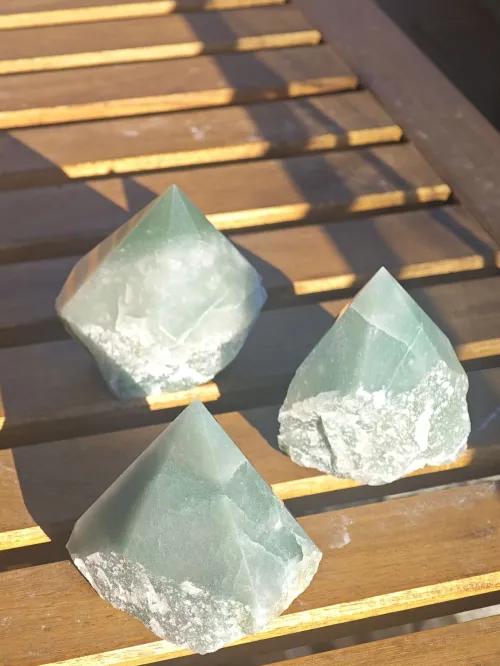
You're browsing an online gem marketplace when two nearly identical green pendants catch your eye – both labeled "natural green stone." Or perhaps you inherited jewelry advertised as jade, only to notice shimmering flecks under sunlight that spark skepticism. This confusion between aventurine and jade happens daily for shoppers, collectors, and spiritual practitioners handling loose stones or artifacts. Beyond the aesthetic similarities, you likely wonder: "How do these minerals fundamentally differ?", "Could my pendant be misrepresented?", or "Which holds more lasting value?" We've structured this guide to tackle those core distinctions and their real-world applications:
1. What are the foundational differences in mineral makeup and formation?
2. How can you identify one from the other using simple observational techniques?
3. What physical property advantages matter for specific applications?
4. How do rarity factors influence market value comparisons?
5. Which practical considerations should guide purchase decisions?
6. Why might dyed materials cause confusion between the two?
Aventurine consists of quartz with sparkly mineral platelets (like mica or fuchsite), while jade describes two separate minerals: nephrite (calcium magnesium silicate) and jadeite (sodium aluminum silicate). Aventurine registers at 6.5-7 on the Mohs hardness scale, matching jadeite but slightly outperforming nephrite (6-6.5). Despite similar hardness ratings, jade’s interlocking fibrous crystals make it significantly tougher against impacts and carver’s tools.
Chemically, aventurine’s green coloration comes from chromium-rich fuchsite inclusions within its silica base. In contrast, jade’s green hues stem from minerals like chromium in jadeite or iron deposits in nephrite. This compositional difference leads to distinct formation environments too. Primary aventurine deposits occur as metamorphic formations in India and Brazil, while high-quality jade typically emerges from high-pressure zones like Myanmar's mines or Guatemala's jadeite zones. Under magnification, aventurine often reveals granular structures with flecks while nephrite jade shows felted fibrous patterns and jadeite appears granular. Treatments also differ: Jadeite regularly undergoes heat enhancement to boost color saturation while aventurine treatments typically aim for clarity improvement.
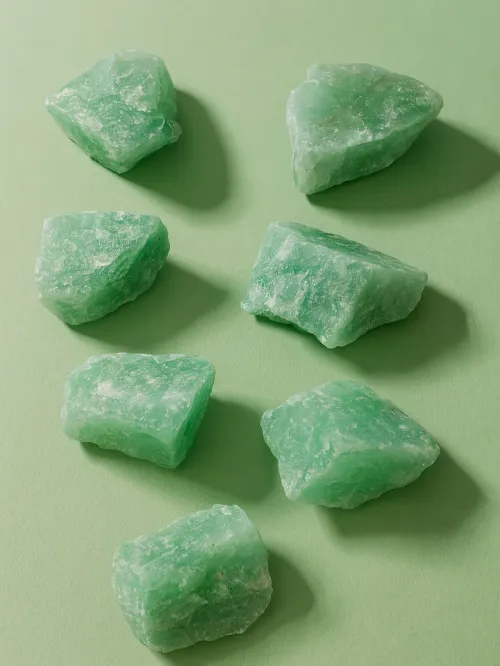
Aventurine typically forms through the recrystallization of quartz during medium-grade metamorphic processes, acquiring metallic inclusions when neighboring fuchsite or hematite flakes embed into its structure during crystallization. Jade originates from distinct geological events: nephrite jade develops through contact metamorphism where dolomitic limestone interacts with magmatic fluids, while jadeite requires high-pressure, low-temperature conditions unique to subduction zones.
The mineral formation environments directly influence appearance and stability. Aventurine develops in vein formations with coarse grains that may exhibit granular patterns under magnification. Jade's crystal structures differ dramatically: nephrite forms interwoven fibrous tufts responsible for its renowned toughness, while jadeite presents granular or fibrous bundles. These structural variations mean jade can withstand mechanical stresses better despite similar Mohs ratings. For collectors, geographic origins serve as authenticity proxies. Myanmar and Guatemalan sources produce premium jadeite, while Indian and Russian aventurine exhibits the desired chromium-rich sparkle. Volcanic origins lend jade stability in fluctuating temperatures, whereas aventurine’s silica base may show microscopic fractures during rapid changes.
Aventurine reveals its identity under light manipulation: rotate a suspected stone while observing for bright metallic flashes from mineral inclusions – a phenomenon absent in all jade types. Jade instead shows subtle greasy or vitreous luster, with nephrite looking slightly oily under sunlight and jadeite giving a glass-like sheen.
Use these in-hand techniques for preliminary assessment:
Jadeite holds higher intrinsic value due to geological scarcity with Imperial green varieties commanding auction prices, though untreated premium aventurine maintains steady collector interest for its distinct aesthetics. Market value is shaped by color consistency, translucency, and structural integrity rather than mere categorization.
Supply scarcity varies greatly: Fine jadeite occurs in limited Myanmar deposits while aventurine exists in larger quantities across India and Brazil. Jade valuation relies heavily on "imperial" color saturation in jadeite or spinach-green intensity in nephrite. Aventurine premiums focus on sparkle density and absence of fractures. For investors, jade's heritage as an artistic medium across Asian cultures adds cultural value premiums unseen with aventurine. Yet aventurine offers affordability for large decorative pieces. Untreated specimens command higher trust premiums in both categories – consult gem certifications when available. Jade's value often appears in micro-carving resilience where aventurine fractures under pressure. However, aventurine’s multi-color occurrences (blue, red) create niche desirability unavailable in jade.
Identify your primary use case before considering aesthetics. For carving projects requiring deep engraving or jewelry that will endure impacts, nephrite jade’s toughness outmatches aventurine despite similar hardness ratings.
If sparkling translucence is your priority, green aventurine with high fuchsite concentration delivers that light-catching look – request a vendor video showing light movement across surfaces to verify before purchase. When considering heirloom pieces or investment stones, untreated jadeite from authenticated Myanmar sources holds stronger appreciation potential than aventurine. For dyed materials – which affect both categories – judge depth of color and its distribution; aventurine simulants may show streakiness under magnification whereas dyed nephrite appears uniform but lacks natural saturation gradients. Origin transparency serves as reliability proxy: Indian aventurine with documentation typically trumps vague "green quartz" listings. In jewelry settings requiring sonic cleaning, nephrite jade handles ultrasonics well while fractured aventurine may deteriorate.
Aventurine and jade hold distinct cultural positions: Jade has been valued across Asian civilizations since Neolithic times as a ritual and status symbol, particularly in Chinese culture where it symbolized ethical perfection. Aventurine, while used ornamentally for centuries, carries comparatively newer associations with opportunity and creativity in Western traditions.
These historical contexts influence aesthetic treatments. Jade carving thrives on subtle luster and texture variations perfected by Chinese artisans over millennia. Aventurine's appeal centers around its sparkle in contemporary crystal-based jewelry rather than historical carving traditions. Jadeite from Myanmar historically adorned imperial regalia, linking its deep greens with divine protection concepts. Aventurine, rediscovered later, gained favor during Renaissance glassmaking experiments and now features prominently in holistic jewelry designs. Modern artisans may combine the materials: Nephrite provides structural stability for organic-shaped pendants while aventurine chips create glittering inlay accents. Understanding lineage helps collectors appreciate why jade maintains cultural valuation premiums versus aventurine's decorative niche.
Focus squarely on two core distinctions: First, check under direct lighting for aventurine's signature glitter effect – its absence points toward jade. Second, prioritize documented source verification – request geological origin certificates whenever possible to prevent misrepresented treatments. Remember jadeite's density means it feels heavier in hand than similarly sized aventurine.
Can dyed aventurine mimic imperial jade's color?
While dyed aventurine may achieve similar green saturation, it typically appears more opaque than translucent imperial jadeite and lacks natural color distribution patterns.
How does chlorine exposure affect these stones?
Jade (especially nephrite) offers superior chlorine resistance against swimming pool chemicals compared to untreated aventurine, which may develop surface dullness over time.
Why might a green stone appear differently indoors versus outdoors?
Certain lighting conditions can mask aventurine's glitter effect indoors while revealing it under natural light – an identification clue when jade remains consistent across environments.
Is ruby in zoisite related to either material?
Ruby in zoisite represents a distinct mineral combination unrelated to jade or aventurine, though it sometimes appears similarly through superficial coloring.
Can ultrasonic cleaning damage these materials?
Untreated nephrite generally withstands ultrasonic cleaning, while aventurine with existing fractures may develop chips. Verify your stone's integrity before attempting deep cleaning.


$
