Jade (comprising nephrite or jadeite minerals) and green aventurine (a quartz variant with mica inclusions) exhibit distinct visual and physical properties due to different mineral structures—jade tends toward semi-translucent oily luster with variable green tones, while aventurine typically displays uniform grassy-green coloring with characteristic sparkly "aventurescence" under light.
You're browsing an online jewelry store or examining a friend's pendant when a question hits: "Is this real jade?" That leafy green stone could equally be the popular quartz known as green aventurine. Whether you're selecting crystals for meditation, purchasing gemstone jewelry, or researching properties, the visual similarity between these stones creates genuine confusion. You'll likely need to decode several practical challenges: How to visually separate them under varied lighting? What simple touch tests reveal their identity? And how to avoid paying jade prices for mislabeled aventurine? This guide walks through these core concerns with tangible verification steps.
1. How do lighting conditions reveal visual differences?
2. What tactile cues help distinguish their surfaces?
3. Why composition explains hardness and durability variations?
4. How everyday jewelry handling highlights distinct behaviors?
5. What tests reliably confirm authenticity at home?
6. When might retailers misrepresent aventurine as jade?
Their core differences originate at the molecular level, not aesthetics. Jade forms through high-pressure metamorphic shifts creating interlocking fibrous structures of nephrite or jadeite, whereas aventurine develops when quartz crystalizes around fuchsite mica platelets. This atomic arrangement makes jade notably denser (3.0-3.3 g/cm³ compared to aventurine's 2.6-2.7 g/cm³) meaning comparable sized pieces feel heavier in hand.
These compositional disparities affect durability too. Both land between 6-7 on the Mohs hardness scale, but jade's toughness often surpasses aventurine due to its fibrous network—this explains why aventurine jewelry may show minor chipping around drill holes or edges with regular impact. Environmental formation also matters. Jade emerges under extreme geological pressures and temperatures while aventurine forms when silica-rich solutions cool, creating mica "glitter" suspended within the quartz matrix.
Observing carefully under varied light gives immediate clues. Jade often shows subtle color gradations (creamy wisps or darker green veining in natural light), while aventurine typically maintains uniform mid-green saturation without transitions.
Position stones under a full-spectrum bulb or daylight, rotating the gem every 20 degrees. Watch for three signature reactions:

Physical interaction provides reliable secondary verification. Jade usually feels silkier when rubbed against skin, while aventurine may register as slightly grittier depending on mica concentration.
Thermal conductivity differences are easily testable. Hold stones at room temperature 15 minutes, then briefly cup them against your cheek. Jade maintains its cool feel significantly longer thanks to higher density. You can also note texture response by running the stone over your forearm—quality nephrite slides smoothly like soap, whereas lower-grade aventurine displays microscraggly resistance from exposed quartz granules.
Practical usage highlights key mechanical differences. Jade's structural toughness resists chipping with accidental bumps—ideal for bracelets or rings. Aventurine's softer matrix may develop micro-splintering around settings over time.
Observe how your stone collects skin oils. Jade tends to build a soft patina that enriches its luster after repeated contact—this explains why heirloom jade bangles feel smoother decades later. Aventurine shows little surface transformation but its mica plates can accumulate residue in crevices requiring gentle cleaning. Additionally, aventurine pendants typically swing with lighter mobility than jade due to density differences—a functional detail when selecting necklaces.
Arm yourself with four household verification methods requiring minimal tools:
When purchasing online, request sellers provide video footage rotating gems under bright light to confirm—or rule out—aventurine’s signature sparkle effect. Also examine for unnaturally vivid green hues that may indicate dyed quartz masquerading as jade; dye concentrates along surface fractures visible under magnification.
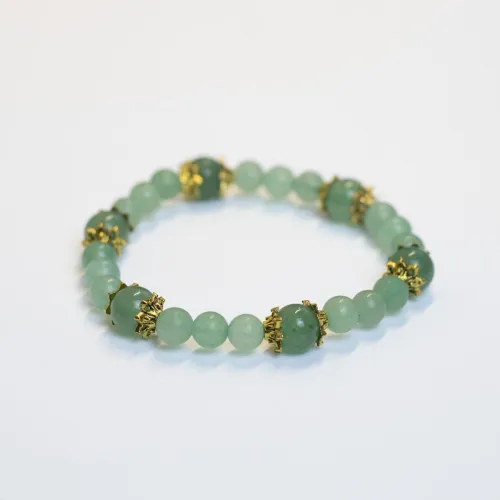
Understand common marketplace confusion points. While aventurine costs significantly less than fine jade, some retailers label it "Indian Jade" or "Aventurine Jade"—technically inaccurate but not illegal. True fraud occurs when vendors deliberately hide dyed treatments.
Beware descriptions like "new jade" applied to serpentine or light green quartz that lacks aventurine's characteristic inclusions. Authentic jadeite shows certificate verifiable origin—though nephrite remains problematic to source-trace. If a vendor claims spiritual properties are "identical," cross-verify physical attributes since metaphysical traditions distinguish their energies.
Keep these core filters when evaluating stones: Always observe lighting responses first—the presence or absence of sparkle gives 80% certainty immediately. Second, remember thermal behavior—persistent coolness indicates density matching jade. Finally, leverage accessible tools: magnifying surfaces and copper coins settle disputes about composition and hardness.
Understanding that these stones form differently—under geological pressure versus silica evaporation—explains why they handle differently practically. For high-wear pieces like rings or bracelets prioritizing resilience, jade's durability may justify its premium cost. That said, aventurine holds legitimate appeal for vivid coloring and shimmering presence at accessible price points—just ensure you're paying quartz value, not jade rates.
Q: Will everyday rings show more scratches with aventurine?
A: Due to slightly lower toughness, aventurine may show more micro-abrasions over years of knocks against surfaces than comparable jade pieces would develop.
Q: Can I distinguish them solely by hardness testing at home?
A: While jade tests harder, DIY methods risk damaging stones—use visual assessments like lustre differences or light sparkle as gentler primary indicators.
Q: Is green aventurine just cheaper jade?
A: No, they're distinct minerals with differing values—but aventurine costs substantially less allowing access to bold green coloring when premium jade prices exceed budget.
Q: Why might a dealer sell aventurine labeled as jade?
A: Jade commands higher prices—unscrupulous sellers exploit visual similarities. Some cultural contexts also casually apply "jade" to green stones lacking geological accuracy.


$
